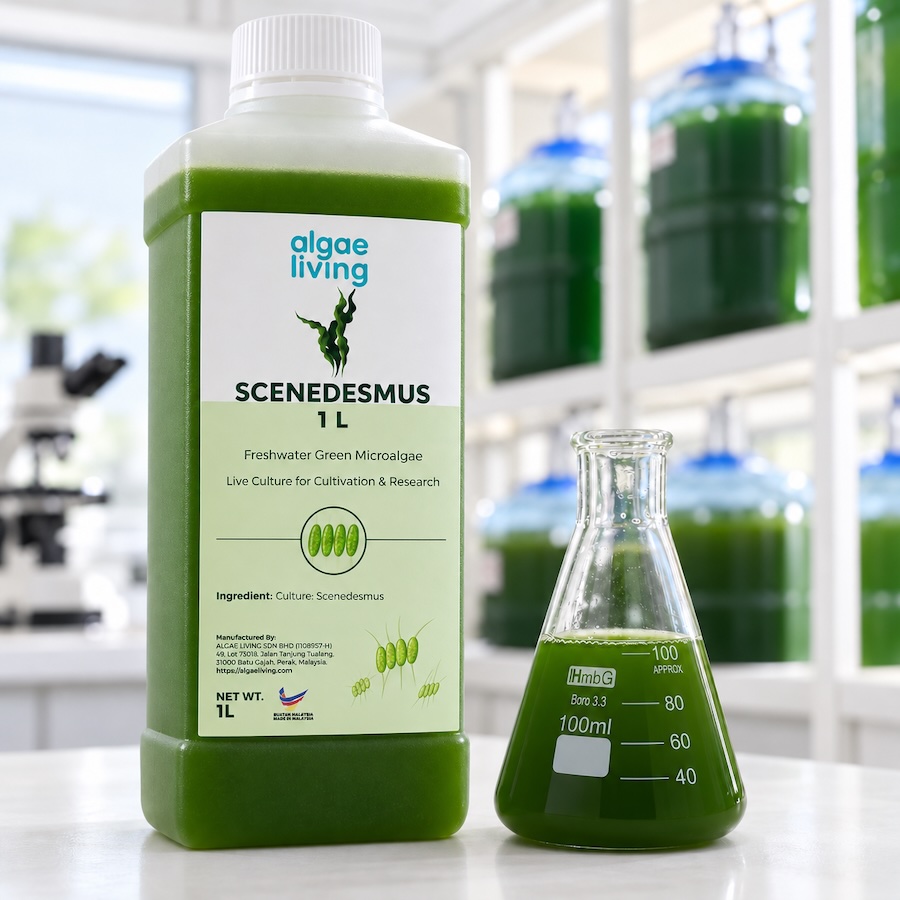
Scenedesmus sp. is a genus of colonial, non-motile green microalgae belonging to the class Chlorophyceae. Found abundantly worldwide in freshwater ecosystems and occasionally in brackish or marine environments, it is recognized for its distinctive cell arrangements, rapid reproduction rate, and high nutrient profile. Because of its metabolic versatility, Scenedesmus is one of the most widely studied microalgae genera for industrial and environmental biotechnology.
Biological Characteristics
- Morphology & Structure: They typically exist as coenobia—flat or slightly curved colonies composed of 2, 4, 8, or up to 32 cells aligned side-by-side. The cells possess a rigid, multi-layered cell wall containing cellulose and a highly resistant biopolymer called algaenan.
- Phenotypic Plasticity: Scenedesmus displays high polymorphism. When exposed to chemical cues (kairomones) from predators like Daphnia, individual cells can trigger the formation of larger colonies or grow defensive bristles and spines to avoid being eaten.
- Reproduction: The genus reproduces asexually via the formation of non-motile internal clones called autospores within the parent cell wall.
Biochemical Composition
The biomass of Scenedesmus sp. is highly nutritious, typically consisting of:
- Proteins (up to 40–63%): High concentration rich in essential amino acids like lysine.
- Lipids (12–35%): Abundant in polyunsaturated fatty acids (PUFA) and oleic acid.
- Pigments: Rich in chlorophyll a and b, alongside high-value carotenoids such as lutein, β-carotene, and astaxanthin, which accumulate under stress.
Prominent Applications
Due to its robust growth and metabolic characteristics, Scenedesmus sp. is extensively utilized across multiple sectors:
- Biofuels & Energy: Its capacity for rapid lipid accumulation—especially when subjected to nitrogen deprivation—makes it a prime candidate for biodiesel production. It is also researched for producing bioethanol and biohydrogen.
- Bioremediation & CO2 Capture: These microalgae are exceptionally efficient at filtering municipal or agricultural wastewater by consuming excess ammonia and phosphorus. They are also deployed as a clean technology to capture and mitigate atmospheric carbon dioxide (CO2).
- Aquaculture & Animal Feed: Used widely as a live food source in early larval stages for fish and crustaceans due to its easy production and robust nutritional profile.
- Nutraceuticals & Pharmaceuticals: The biomass possesses strong antioxidant, antimicrobial, and potential antitumor properties, largely driven by its long-chain free fatty acids and bioactive monosaccharides.