
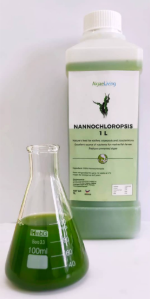
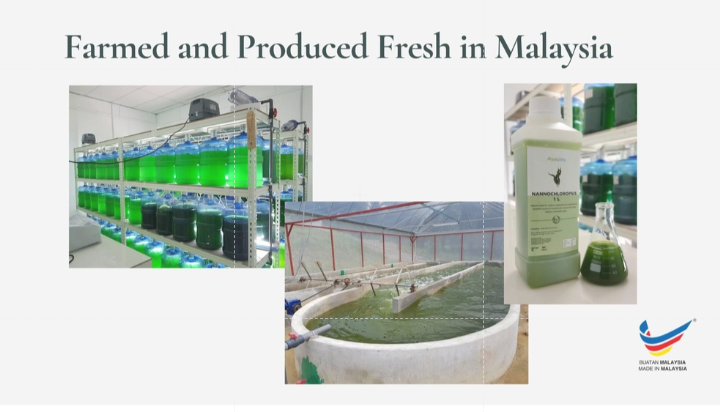
Nannochloropsis live culture refers to the controlled growth of this microalgae under specific conditions such as light, temperature, salinity, nutrients, and aeration. It is typically cultivated in either indoor photobioreactors or outdoor ponds to produce high density algal biomass. Nannochloropsis is a genus of microalgae widely used in aquaculture, biotechnology and bio product industries. It is a small, single celled marine phytoplankton known for its high nutritional value especially its rich content of lipids, proteins and essential fatty acids such as EPA (eicosapentaenoic acid).
KEY FEATURES
- Fast growth rate under optimal conditions
- High lipid content, especially omega-3 fatty acids (EPA)
- Rich in protein and pigments useful for nutrition and aquaculture
- Easy to maintain in controlled systems
- Highly resistant to contamination compared to other microalgae
KEY BENEFITS
Rich Source of Essential Nutrients
- High-quality proteins
- Omega-3 fatty acids (especially EPA)
- Vitamins and minerals
- Chlorophyll and antioxidants
Excellent Live Feed for Aquaculture
It improves
- Survival rates
- Growth performance
- Disease resistance
- Pigmentation quality
High Lipid Content
Nannochloropsis is known for its high oil concentration, making it useful for:
- Omega-3 production
- Biofuel research
- Nutraceutical products
Fast Growth and High Biomass Production
The algae grows rapidly under suitable conditions, allowing:
- Continuous harvesting
- Efficient large-scale production
- High productivity in limited space
Suitable for Biofertilizer Applications
The biomass contains nutrients and bioactive compounds that can:
- Enhance plant growth
- Improve soil microbial activity
- Increase crop health naturally
Improves Water Quality in Aquaculture
In culture systems, it can:
- Stabilize water conditions
- Support beneficial microorganisms
- Reduce harmful waste accumulation
APPLICATIONS
Aquaculture Feed
One of the most important applications of Nannochloropsis is in aquaculture.
It is commonly used as feed for:
- Rotifers
- Artemia
- Fish larvae
- Shrimp larvae
- Shellfish
Fish and Animal Feed Supplements
Nannochloropsis biomass can be added into:
- Fish feed pellets
- Poultry feed
- Livestock feed
- Pet food
Research and Biotechnology
Frequently used in:
- Microalgae research
- Genetic studies
- Pharmaceutical research
- Sustainable biotechnology development
Directions for Use
For Aquaculture Feeding
- Add directly into culture tanks or feeding systems
- Feed daily in small portions
- Maintain green water condition when necessary
General Dosage
- Depends on species and culture density
- Common concentration:
0.5–2 million cells/mL in larval tanks