

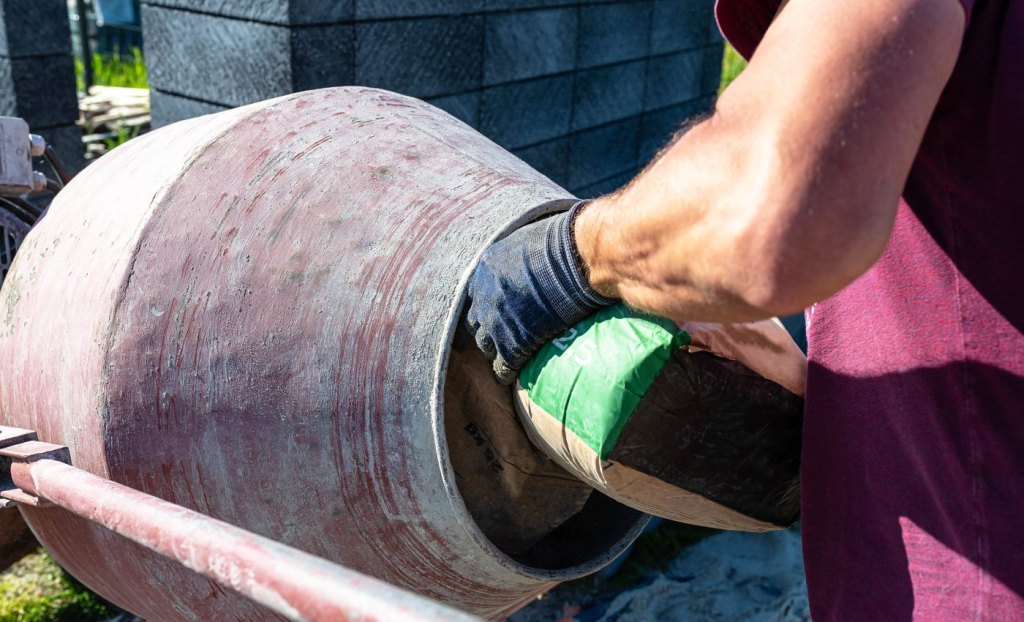
Researchers report that seaweed can be turned into a concrete ingredient that replaces some cement while storing extra carbon as the material hardens.
That finding pushes an ordinary coastal crop into a new role that could cut pollution from concrete before a building is even finished.
Seaweed powder into wet cement
In these test mixes, the algae began in hatchery tanks and ended up as a dark powder spread through wet cement.
At the University of Miami, civil engineering professor Ali Ghahremaninezhad guided changes that let the material replace more cement without losing the project’s central promise.
That promise depended on more than simply adding algae, because the untreated material could interfere with how the concrete set and held together.
The result opened a larger question the rest of the article needs to answer, whether this lower-emission recipe can perform like concrete people already trust.
From algae to biochar
On Virginia Key, a barrier island off Miami, UM’s hatchery grows the native algae used in the experiments.
After harvest, the algae becomes biochar, a charcoal-like carbon material, when heat drives off most gases in low oxygen.
Its pores can hold water and give cement products more places to form, which is why treatment matters so much.
Once the algae reaches that stage, the project stops being about seaweed itself and starts being about engineering.
Cement and carbon emissions
Most of concrete’s climate burden comes from cement, whose production accounts for about 7 to 8 percent of global carbon emissions.
Manufacturing it releases carbon both from fuel burned in kilns and from limestone that breaks apart under intense heat.
Every bag of cement removed from a mix cuts pollution before a building even starts to serve its purpose.
Replacing even part of that ingredient matters because concrete is used so widely that small recipe changes add up fast.
Making more replacement
Earlier biochar tests in the same lab showed that dosage can improve crack healing or reduce strength.
That tension explains why the Miami group is treating algae char before blending it, instead of just pouring more in.
A separate algal biochar study found that a 30 percent cement replacement caught up in strength after several weeks.
Those results do not guarantee success here, but they show algae-derived carbon can behave like more than waste.
Locking carbon inside
The team also uses carbon curing, exposing fresh concrete to concentrated carbon dioxide while the mixture hardens.
That gas reacts with calcium-rich ingredients and forms stable minerals, so carbon becomes part of the solid instead of air.
A recent approach captured up to 45 percent of injected carbon dioxide without weakening concrete.
Miami’s mixes aim to pair that storage step with lower cement use, attacking emissions from both sides at once.
Seaweed, cement, and Florida
Florida gives the idea a harsh proving ground, where salt, heat, humidity, and storms punish ordinary concrete.
Any lower-carbon mix has to keep strength, resist cracking, and avoid opening easy paths for water and corrosion.
That local pressure explains why the project focuses on durability, not only on shrinking the carbon footprint.
If the material fails early on a coast, the climate benefit disappears under repairs, replacements, and more cement.
Award and momentum
The project won support after UM researchers presented it at Climate Correction in Orlando in March 2026.
Its $25,000 grant will help buy equipment that gives the researchers tighter control over biochar production.
“Look at the problems happening in your community and look across disciplines and think creatively,” said Rodriguez.
That mindset matters here because the solution depends on marine science, materials engineering, and construction all working together.
What could scale
Algae offers something concrete makers need badly, a local source material that does not rely on shrinking industrial waste streams.
When useful material grows nearby, transportation shrinks and supply can become less tied to coal plants or steel mills.
“A lot of the solutions that we’ve derived came from things that are right around us,” Rodriguez said.
Even so, scaling this kind of mix will depend on repeatable quality, low cost, and standards builders can trust.
Limits before launch
No one has shown yet that algae concrete can move from lab cylinders to highways, towers, and bridges unchanged.
Long-term durability, corrosion behavior, curing speed, and cost will decide whether the idea becomes a specialty product or standard practice.
Because treatment steps add complexity, the climate win has to exceed the energy and money spent creating them.
Those unknowns are normal at this stage, but they explain why promising concrete formulas often take years to spread.